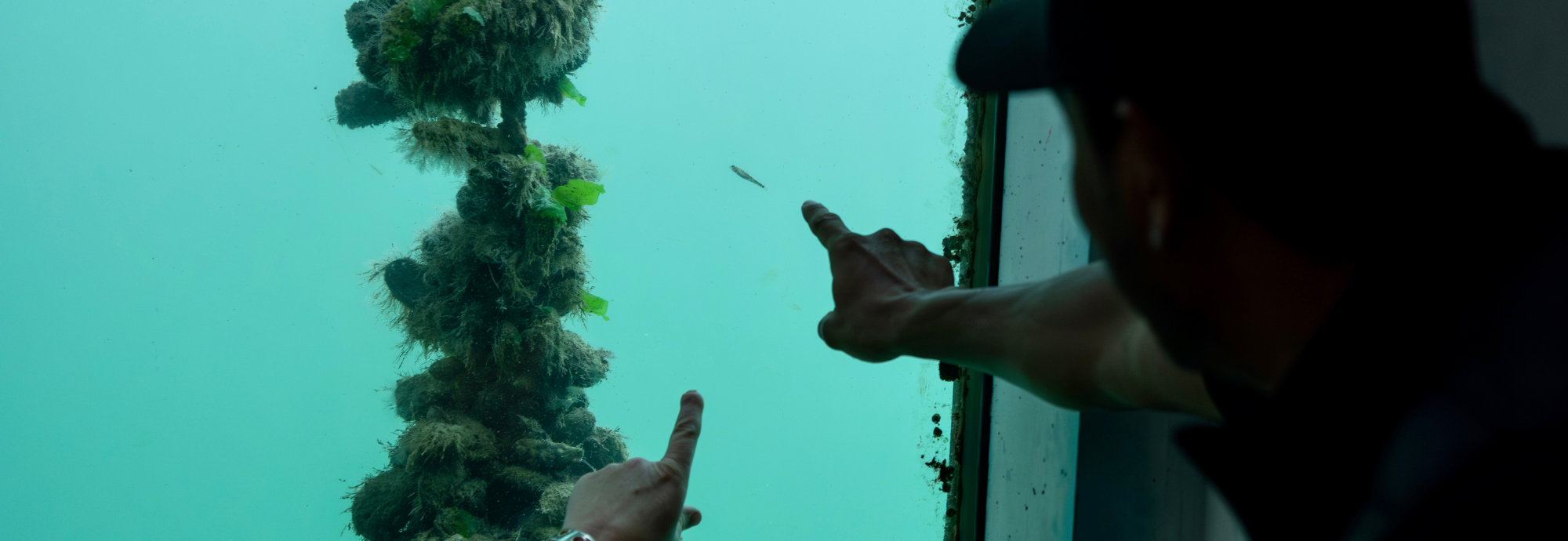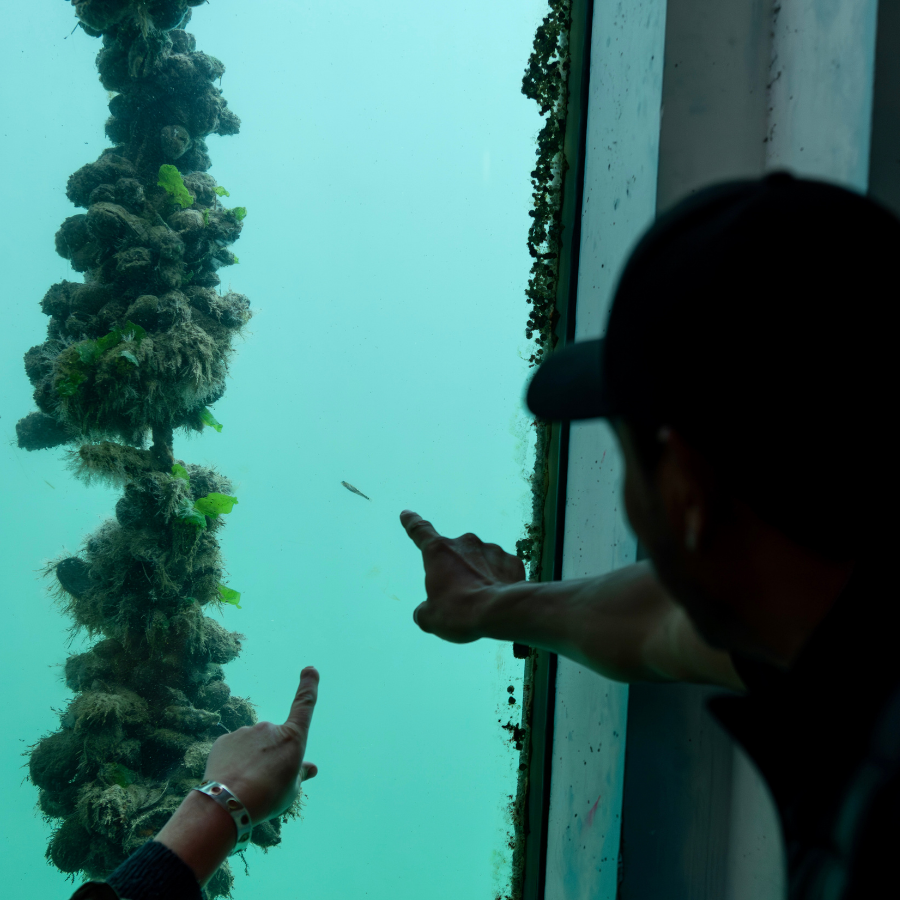
Visitors to the National Maritime Museum Cornwall can now witness marine conservation in action through a remarkable new installation in the harbour waters just outside the Tidal Zone windows.
Suspended in front of the viewing area is a SeaHive artificial reef, which is an innovative structure that transforms recycled fishing gear into a thriving underwater habitat.
The Tidal Zone provides an ideal home for this SeaHive installation. With its stable environment and excellent supply of clean, plankton-rich water flowing from the Fal estuary, conditions are optimal for marine life to flourish. Museum visitors can observe this living ecosystem as it develops, offering a unique window into the hidden world beneath the harbour’s surface.
SeaHives are durable, rocky reef-like structures designed to increase both the diversity and density of marine life by creating refuge where none existed before. Think of them as “underwater beehives”, the seven hexagonal tubes in this installation provide a range of habitats that cater to different marine species.
The SeaHive in the Tidal Zone offers nearly 8 square metres of surface area for filter-feeding animals to colonise, whilst providing safe shelter for fish and invertebrates to live. For many fish and invertebrate species, the young stages float in the water until they find a suitable place to settle for the rest of their lives. SeaHives provide exactly that, a permanent home where marine life can establish and thrive.
The coastline and seabed of the Falmouth estuary host a rich and diverse range of fish and invertebrates that require protection from human disturbance and pollution. SeaHives serve as an effective mechanism for mitigating and compensating for coastal development, whilst also offering shelter from extreme weather.
The filter-feeding animals that colonise this SeaHive will actively help improve water quality in the harbour. Meanwhile, the hollow structure of the reef provides an ideal home for Wrasse and other important fish species.

Perhaps most impressive is what this SeaHive is made from. Manufactured in England and Wales, SeaHives are created from recycled Abandoned, Lost and Discarded Fishing Gear (ALDFG) collected from beaches, the seabed, ports and harbours around the UK. This material is exceptionally strong and durable, qualities that might otherwise see it incinerated or sent to landfill. Instead, approximately 25kg of this recovered fishing gear has been transformed into a structure that will support marine life for decades, if not hundreds of years.
The tubes are rotomoulded, meaning no added chemicals can leach into the environment. The reef doesn’t touch the seabed so there’s no risk of it breaking down into smaller pieces that could contribute to microplastic pollution.
The SeaHive in the Tidal Zone was funded by Sea-Changers, a UK marine conservation charity managed by a small team of volunteers who are passionate about the UK’s seas, shores and wildlife. The SeaHive in the Tidal Zone was supplied by Sea Hives Ltd, a UK registered company based in Somerset.

National Maritime
Museum Cornwall Trust
Discovery Quay
Falmouth Cornwall
TR11 3QY
View Map
See our opening hours
Tel: +44(0)1326 313388
Email: enquiries@nmmc.co.uk