Opening Times Daily 10am - 5pm
Ticket PricesPay once, get in all year Adults £19 Children (Under 18s) £10 Children (Under 5s) Free
Getting here National Maritime Museum Cornwall Trust Discovery Quay Falmouth Cornwall TR11 3QY
View on Google Maps
Contact Tel: +44(0)1326 313388 Email: enquiries@nmmc.co.uk
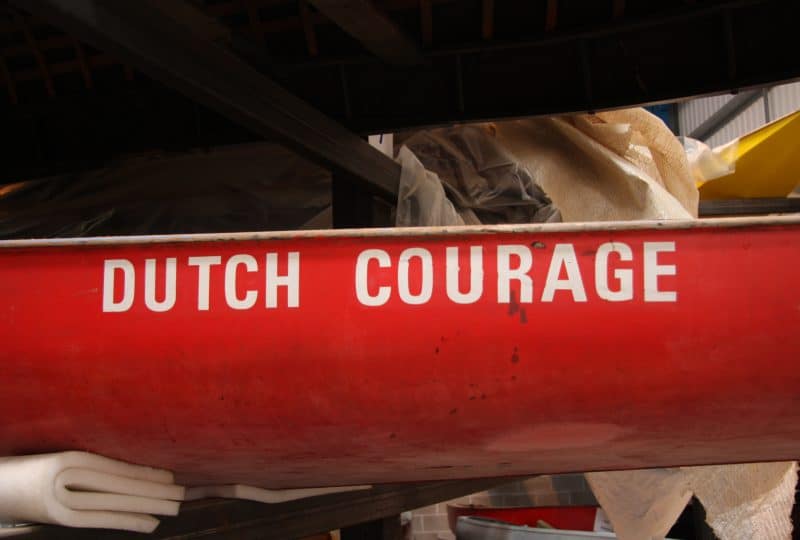
In 1980 the Flying Dutchman class claimed to be the fastest two man centreboard dinghy in the world and even today it remains very competitive. It originated at trials by the International Yacht Racing Union in 1954, soon achieved international status and was subsequently used for the Olympic games from the 1960s to 1992. Its…
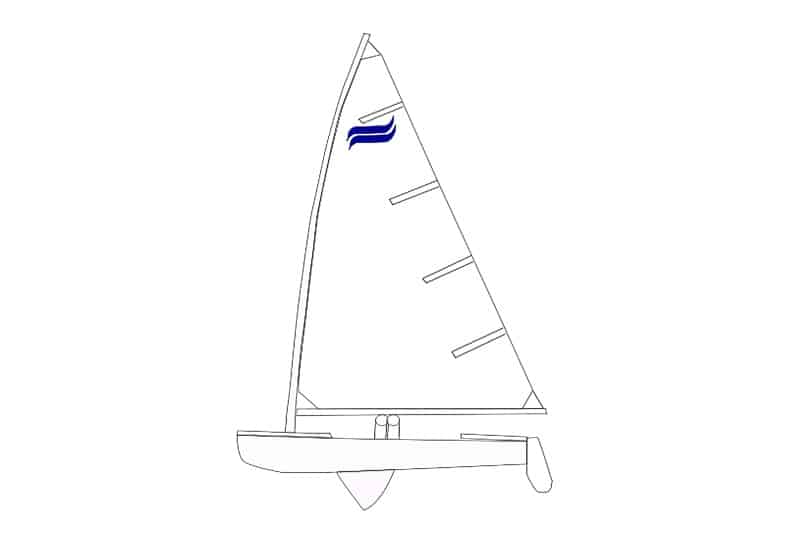
Designed by the Swedish canoe designer Rickard Sarby in 1949, the single handed Finn class racing dinghy was adopted for the Olympics in 1952 in Helsinki, Sarby himself taking the Bronze medal. The Finn replaced the previous arrangement of having a different single hander design for each Olympiad. Predecessors as Olympic Monotypes, the term originally…
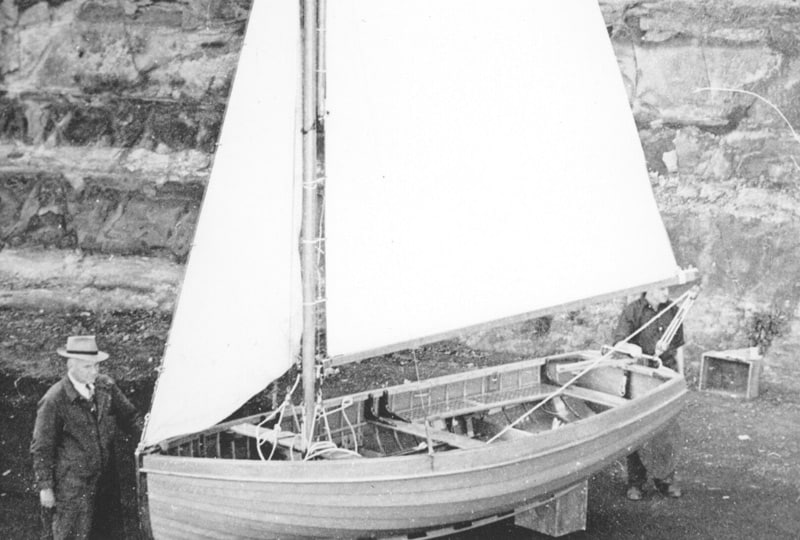
This RNSA (Royal Naval Sailing Association) type of sailing dinghy was a modified version of the 14 ft One-Design Island Class, designed by Charles Nicholson and Uffa Fox in 1935. In 1937 the Admiralty adopted the class, with some modifications, specifically to adapt it for use aboard the Navy’s warships. Its purpose was to provide…
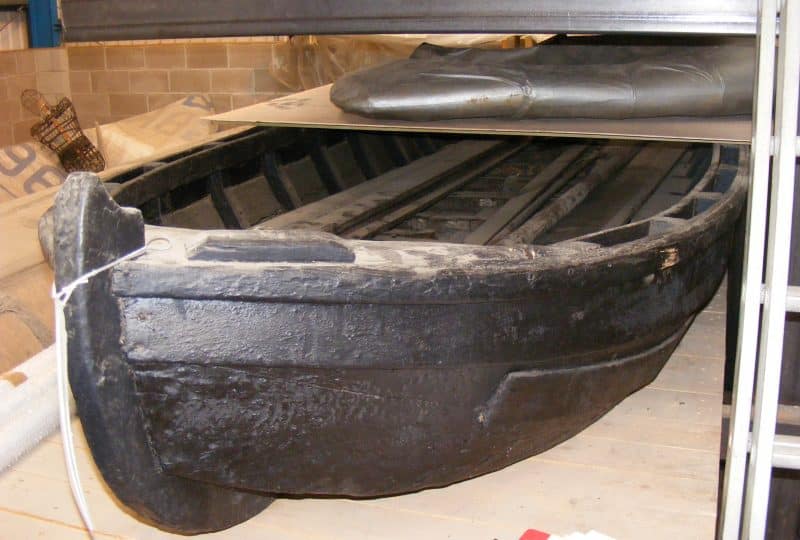
This type of punt originated from the fens of Cambridgeshire and was used as a general working boat and for fishing. This particular example, the last of its kind afloat on the River Ouse/River Cam, was used for catching eels with a trident-shaped spear – an eel gleave. The hull construction is highly individual to…
Disposed, no longer in boat collection.
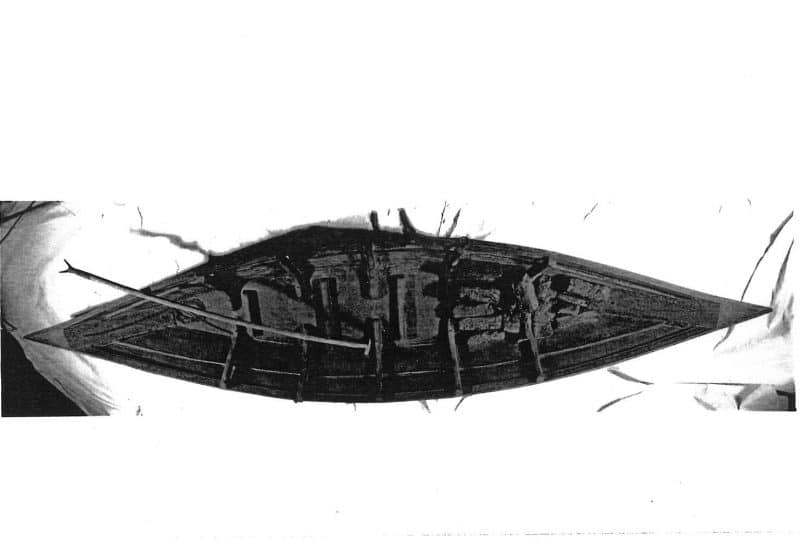
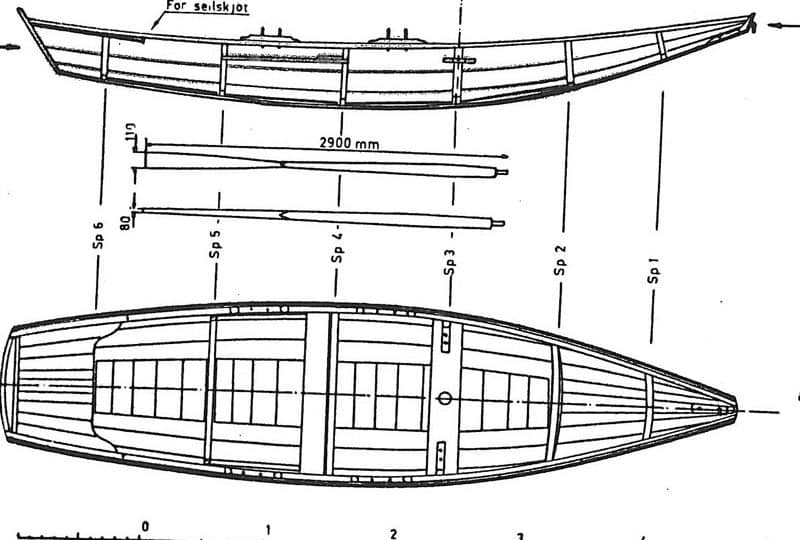
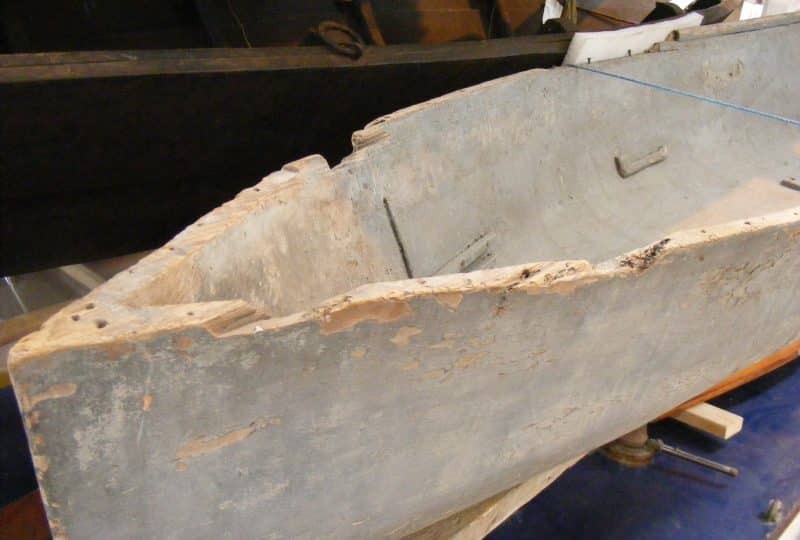
This Holmsbu pram is a working descendant from the same ancestor as many small yachts and dinghies in Britain today. This particular craft was used for herring fishing in the Oslo fjords of Norway. The aft part of the boat is closed off with a bulkhead and planked over to form a watertight compartment in…
A South American logboat from the mid 19th century.The dugout was produced by burning the centre of the log and finishing with a hand axe. A top rail was added and was secured by both metal nails and treenails. The…
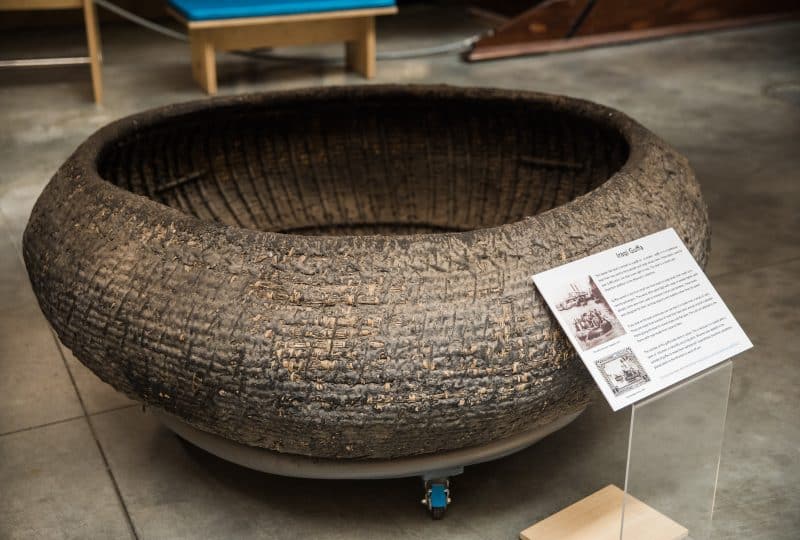
This coracle-like craft is an Iraqi guffa – from the words kuphar or quffa – a traditional form of craft used for both cargo and passenger transport on the rivers of Iraq, notably the Tigris, for millennia: the earliest reference appears in the writings of the Greek historian Herodotus in the fourth century B.C. Photographs…
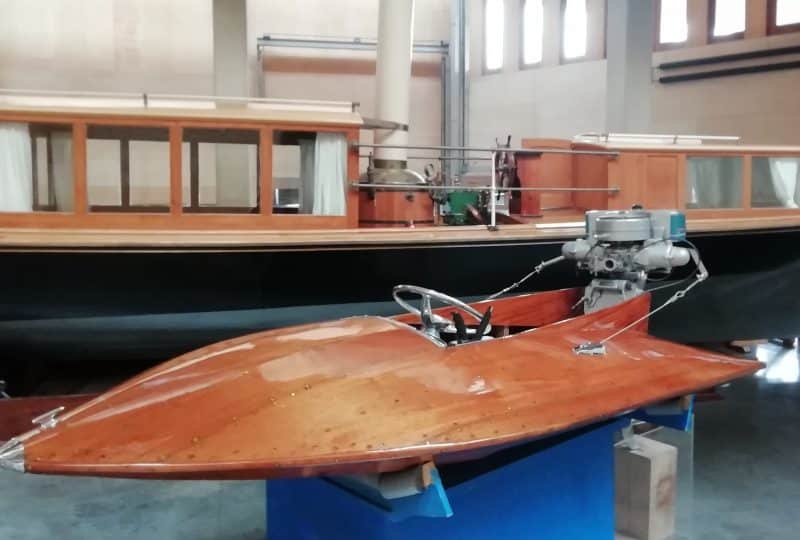
Hydroplanes were developed in the 1920s and 30s as outboard engines became available and increased in size and power. Originally outboards were used on utility boats but as racing evolved and speed records were set hydroplanes were designed as a way of going much faster. This particular boat was designed by naval architect Bruce Crandall…
Sign up for our monthly newsletter for the latest Museum news
Email Sign up
National Maritime Museum Cornwall Trust Discovery Quay Falmouth Cornwall TR11 3QY
View Map See our opening hours
Tel: +44(0)1326 313388
Email: enquiries@nmmc.co.uk
Book Now to Save 10%