Opening Times Daily 10am - 5pm
Ticket PricesPay once, get in all year Adults £19 Children (Under 18s) £10 Children (Under 5s) Free
Getting here National Maritime Museum Cornwall Trust Discovery Quay Falmouth Cornwall TR11 3QY
View on Google Maps
Contact Tel: +44(0)1326 313388 Email: enquiries@nmmc.co.uk
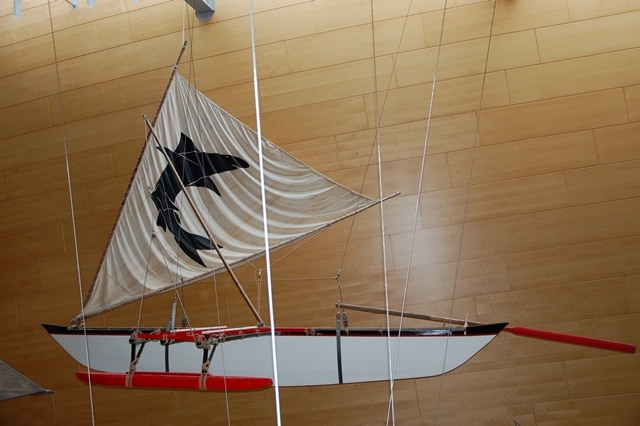
This canoe comes from Kiribati, formerly known as the Gilbert Islands, a group of coral atolls scattered over the Micronesian area of the Pacific Ocean. It features an addition to the hull, an outrigger, attached for stability. Crew sit on a frame attached to the outrigger, balancing the vessel as it heels under the pressure…
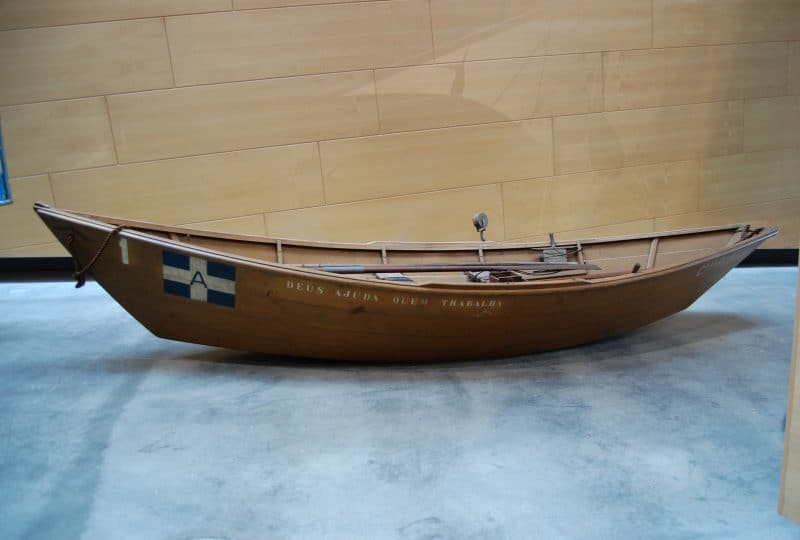
Until the collapse of its cod stocks through over-fishing, the Grand Banks area off Newfoundland was one of the most productive fishing grounds in the world. The region is also renowned for its severe weather conditions. The fishing dory was designed to be used in these treacherous seas, and was used for many years. The…
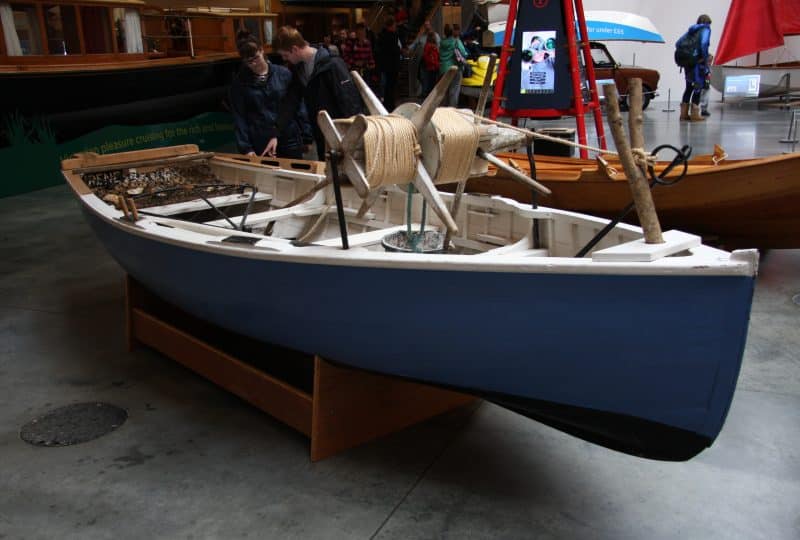
The rights of individuals to collect oysters from the waters around Falmouth have been exercised since at least the late 16th century, and boats equipped with similar dredging gear to Irene’s have appeared in paintings dating back to that period. During the mid 19th century over-fishing led to a scarcity of oysters in the South…
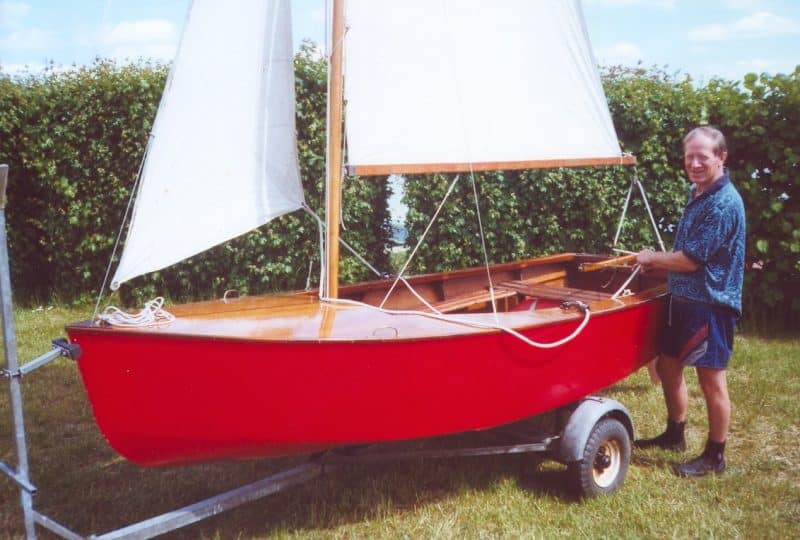
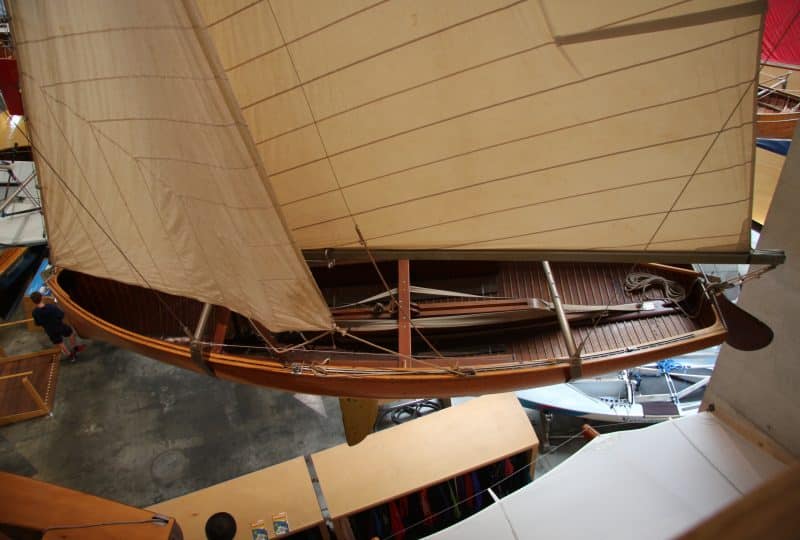
In the years following World War II there was a growing public demand for outdoor leisure pursuits, including boating. By utilising wood and adhesive technology developed during the War boat developers were able to provide a new range of affordable dinghies. The Heron dinghy was designed by Jack Holt in 1951 for the magazine Yachting…
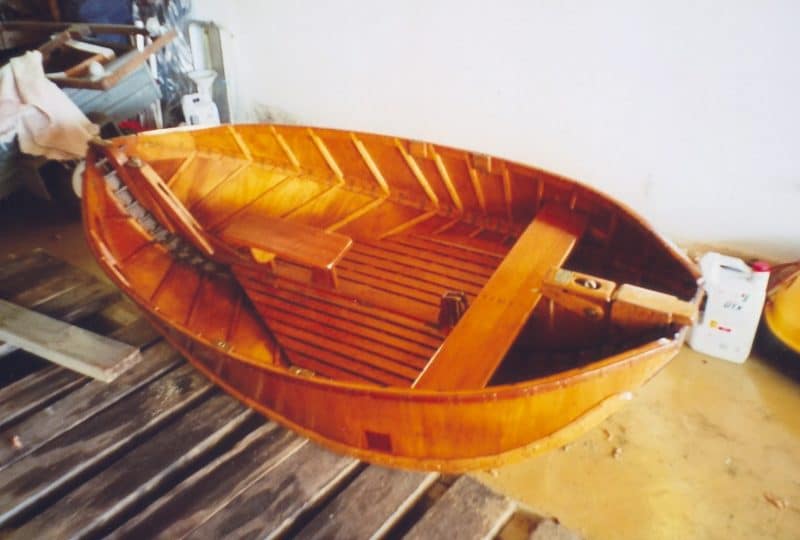
What you are looking at is cutting edge 1930s technology: a Hudson Folding Dinghy, an unusual collapsible dinghy designed and made by R J Hudson (Dick) between the late 1920s and late 1930s, originally in Dublin and then in Devon. Dick worked as a civil engineer in India before returning to Ireland in the 1920s.…
The origins of the International 14 class can be traced back to the early part of the 20th century, when the wealthy owners of steam yachts would race each other in their small dinghy tenders. Together with other regional dinghies the class soon developed into the leading dinghy racing class up to World War…
Different designs of traditional Thames rowing boats have different functions. The Thames skiff, the wherry and the gig are all closely related to each other. The Thames wherry was the tool of the professional boatman and for many centuries was London’s taxi service. The Thames gig was the racing version: light weight and fitted with…
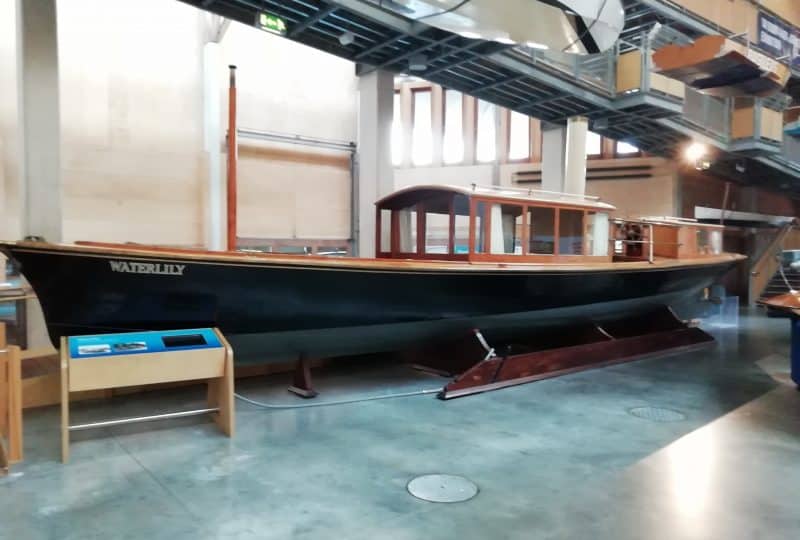
Waterlily is a steam launch designed, built and used by the Thornycroft family. It then remained in use on the Thames until after World War II and took part in the Festival of Britain celebrations in 1951. Although its steam plant was removed in 1919, it was restored and re-installed in 1977-78 when Waterlily was restored…
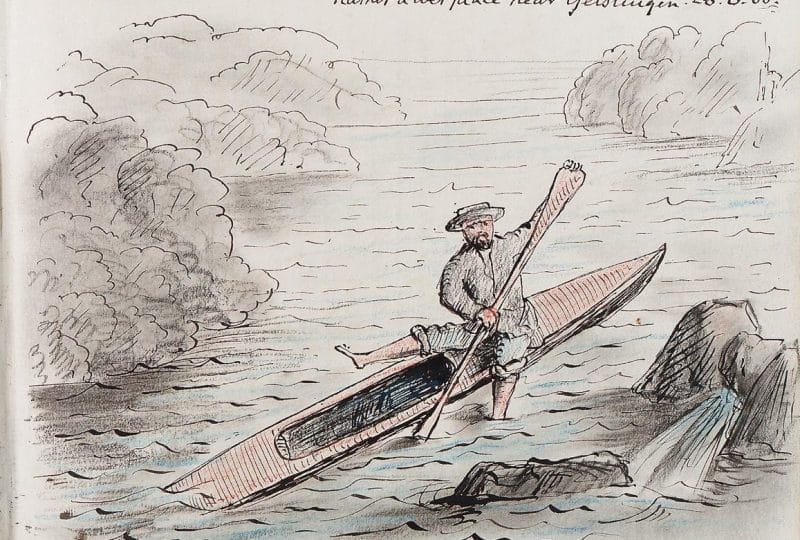
Drawing by “Rob Roy” McGregor Modern day enthusiasts of kayaking probably do not describe their on-water activity as ‘canoodling’, yet that was the term employed 150 years ago by John ‘Rob Roy’ McGregor, to whose activities and designs the development and popularity of the modern sport of leisure kayaking can be attributed. McGregor, nicknamed ‘Rob…
Sign up for our monthly newsletter for the latest Museum news
Email Sign up
National Maritime Museum Cornwall Trust Discovery Quay Falmouth Cornwall TR11 3QY
View Map See our opening hours
Tel: +44(0)1326 313388
Email: enquiries@nmmc.co.uk
Book Now to Save 10%